What Is the Low-FODMAP Diet and How Can FoodGrader Help?
If you’ve recently been diagnosed with IBS, your gastroenterologist or dietitian probably mentioned the low-FODMAP diet. It’s the most evidence-based dietary approach for managing IBS symptoms — but it’s also one of the most confusing to follow in practice.
Here’s what you need to know, and how FoodGrader can make it less overwhelming.
What Are FODMAPs?
FODMAP stands for Fermentable Oligosaccharides, Disaccharides, Monosaccharides, and Polyols. These are short-chain carbohydrates that some people’s guts struggle to absorb properly. When they reach the large intestine undigested, gut bacteria ferment them, producing gas, bloating, cramping, and other IBS symptoms.
The main FODMAP groups are:
- Oligosaccharides — fructans (wheat, garlic, onion) and galacto-oligosaccharides (legumes, lentils)
- Disaccharides — lactose (milk, yogurt, soft cheese)
- Monosaccharides — excess fructose (honey, apples, high-fructose corn syrup)
- Polyols — sugar alcohols like sorbitol and mannitol (stone fruits, sugar-free gum, some sweeteners)
Not everyone reacts to all FODMAP groups. That’s why the diet has three phases.
The Three Phases
Phase 1: Elimination (2–6 weeks)
You remove all high-FODMAP foods from your diet to establish a symptom baseline. This is the hardest phase because everything needs to be checked — and many “healthy” foods like apples, honey, garlic, and wheat are high-FODMAP.
Phase 2: Reintroduction (6–8 weeks)
You systematically reintroduce one FODMAP group at a time to identify your personal triggers. You might discover you’re fine with lactose but react badly to fructans.
Phase 3: Personalization (ongoing)
Based on what you learned, you build a long-term diet that avoids your specific triggers while keeping as much variety as possible. This is where most people settle — and where a tool like FoodGrader becomes most valuable.
The Grocery Store Problem
The hardest part of the low-FODMAP diet isn’t understanding the science — it’s the grocery store. Every packaged product requires reading the ingredient list and mentally cross-referencing against your FODMAP knowledge.
Common hidden FODMAP ingredients include:
- Inulin or chicory root fiber (listed as a “healthy” prebiotic, but high in fructans)
- Garlic powder or onion powder (in almost every seasoning blend and savory snack)
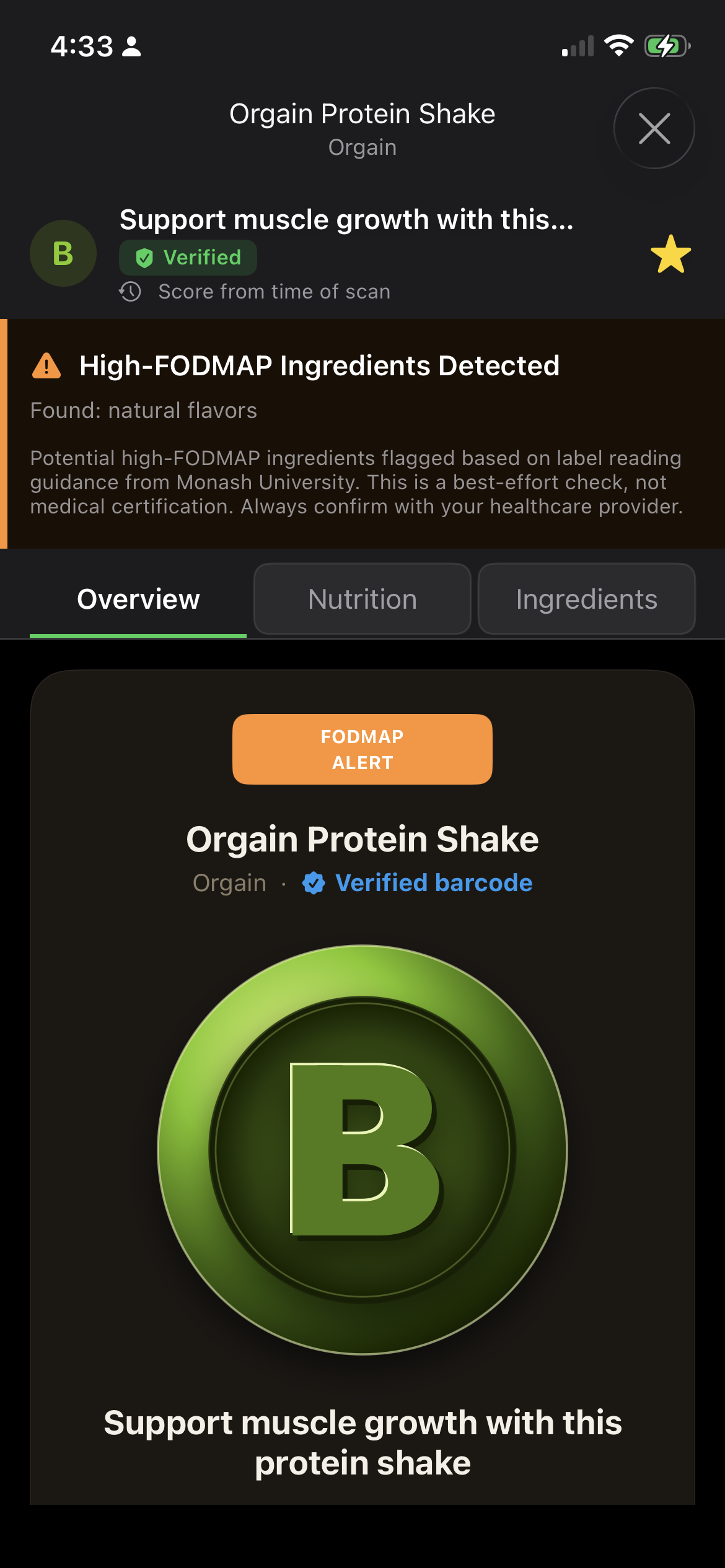
- Natural flavors (could be anything — including garlic or onion derivatives)
- Honey and agave nectar (high in excess fructose)
- Apple juice concentrate (used as a sweetener in many “no added sugar” products)
This is exhausting, time-consuming, and error-prone — especially during Phase 1 when you’re still learning.
How FoodGrader Helps
FoodGrader is designed to make this process faster and less stressful:
-
Scan any barcode — FoodGrader checks the product against a database of 5.6 million products and flags high-FODMAP ingredients instantly.
-
Or just snap a photo — No barcode? Point your camera at the product and get an AI-powered estimate grade in seconds.
-
Personalized to YOUR profile — Tell FoodGrader about your specific dietary needs in plain English. Toggle FODMAP flagging on with one tap. The app grades every product for your triggers, not a generic list.
-
Ingredient-level alerts — Not just a thumbs-up or thumbs-down. FoodGrader tells you which ingredient is the problem and why.
-
Family profiles — Shopping for an IBS household? Create profiles for each family member and grade the same product for everyone.
Practical Tips for Low-FODMAP Shopping
- Stick to the perimeter — Fresh produce, meats, and dairy (check labels on dairy) are easier to evaluate than packaged foods.
- Learn the garlic/onion aliases — “Seasoning,” “spice blend,” “natural flavors,” and “dehydrated vegetables” can all mean garlic or onion.
- Check serving sizes — Some foods are low-FODMAP in small portions but high-FODMAP in typical serving sizes. Monash University’s app is the gold standard for serving-size thresholds.
- Don’t eliminate forever — The goal is Phase 3 personalization, not permanent restriction. Work with a registered dietitian if possible.
A Note About Medical Advice
FoodGrader is not a medical device. FODMAP ingredient flagging is based on label reading and known high-FODMAP ingredient lists — not lab analysis or Monash University certification. Always confirm dietary decisions with your healthcare provider or a FODMAP-trained dietitian.
That said, having a tool that catches hidden garlic powder before it catches you is a meaningful quality-of-life improvement for the millions of people navigating IBS every day.
Ready to make your next grocery trip less stressful? Download FoodGrader free on the App Store and try scanning your first product.
Make Smarter Food Choices Today
Get personalized food grades based on YOUR dietary needs.
Download FoodGrader Free